
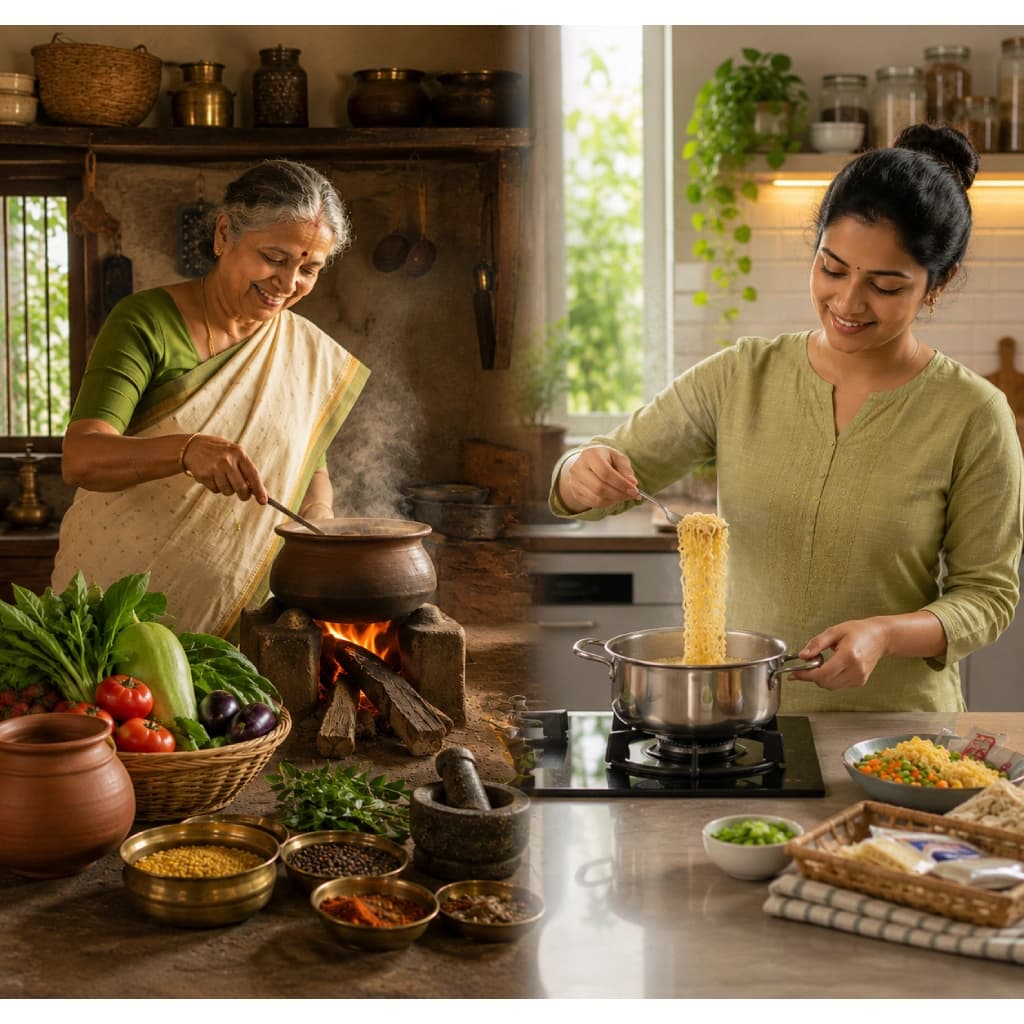
There was a time when the kitchen was at the heart of every home. Fresh vegetables, herbs, spices and grains were part of everyday cooking. Many foods were prepared at home, and traditional ingredients naturally found their way into family meals.
And for many of us, grandma's kitchen holds some of our warmest food memories. The aroma of something cooking on the stove, a warm bowl served when we came home, or a traditional ingredient that grandma always knew how to use — these simple moments became a part of growing up. But today, our kitchens and our lifestyles have changed.
From Traditional Kitchens to Modern Lifestyles
Life today is much busier. Work, school, travel and family responsibilities leave us with less time to spend in the kitchen. Earlier, food preparation was often a part of the daily routine. Today, we look for food that can fit into our busy schedules without taking away from its goodness.
This doesn't mean we have to leave traditional food habits behind. Instead, it gives us an opportunity to find simple ways to bring traditional goodness into modern everyday life.
What We Grew Up With Still Matters
Many traditional Indian kitchens used a wonderful variety of natural ingredients — herbs, greens, grains, pulses and spices. Ingredients such as moringa, tulsi, pirandai and other traditional herbs have been part of our food culture for generations.
Today, we may use them differently or prepare them in more convenient ways, but the connection remains. The ingredients may be familiar, but the way we bring them into our kitchens can evolve with our lifestyle.
The Kitchen Has Changed, But Our Needs Haven't
Our grandparents may have had more time to prepare food from scratch. Today, convenience matters. A working parent may need to prepare breakfast before rushing to work. A family may want something warm and wholesome after a long day. Even when we want to eat better, spending a lot of time in the kitchen isn't always practical.
That's why healthy food should also be convenient enough for everyday life. At Gramathu Soup, this is one of the ideas we believe in — bringing the goodness of traditional and natural ingredients to modern families in a simple and convenient way. Our products can be prepared in just 2 minutes, making it easier to enjoy traditional goodness even when life gets busy.
Tradition Doesn't Have to Stay in the Past
Keeping traditional food alive doesn't mean cooking exactly the way our grandparents did. We can use modern kitchens, modern appliances and convenient preparation methods while still appreciating the ingredients and food culture we grew up with.
A traditional ingredient can become part of a modern meal. A familiar soup can become an easy evening option. And something our grandparents valued can still have a place in our everyday lives.
Passing the Goodness Forward
Food is more than something we eat. It carries memories, habits and traditions from one generation to another. The way we eat may continue to change, but the goodness of natural ingredients and traditional food culture doesn't have to disappear.
The goal is not to choose between tradition and modern life. It's about bringing the best of both together — the goodness we grew up with and the convenience today's families need.
Conclusion
Our grandmothers had their kitchens, and we have ours. The kitchens may look different, our schedules may be busier, and the way we prepare food may have changed. But our love for wholesome, familiar food remains the same.
Tradition doesn't have to stay in the past. It can grow with us, adapt to our lives and still find its place at today's family table. That is the goodness Gramathu Soup hopes to bring forward — from the roots we grew up with to the modern life we live today.
