

Every generation grows up with different food habits. Our grandparents grew up eating foods prepared with traditional grains, greens, herbs, pulses and spices. Today, children are growing up surrounded by packaged snacks, fast food and constantly changing food trends.
But introducing traditional foods to children doesn't mean forcing them to eat the same way our grandparents did. The idea is to make traditional goodness a natural and enjoyable part of modern family life.
Start With Familiar Foods
Children are usually more comfortable trying something when it feels familiar.
Instead of introducing a completely new traditional food suddenly, start with foods they already enjoy. A familiar dosa, idli, rice or snack can be a simple starting point for introducing traditional ingredients.
For example, you can gradually include different greens, millets, pulses, herbs and vegetables in meals your child already likes.
The goal is to make traditional ingredients feel like a normal part of everyday food rather than something completely different.
Don't Make It Feel Like a Lesson
Sometimes, parents explain too much about why a particular food is "healthy" before the child even tastes it.
You don't have to turn every meal into a nutrition lesson.
Instead of saying:
"You have to eat this because it is healthy."
Try simply serving it as part of the family meal.
When children see traditional foods regularly at home, they slowly become familiar with them.
Let Children Discover Different Flavours
Traditional Indian food is full of different flavours, textures and aromas.
Herbs, spices, greens, grains and vegetables can all introduce children to something new.
Don't expect them to love everything immediately. A child may reject a particular food the first time and enjoy it later.
Give them opportunities to see, smell and taste different foods without putting too much pressure on them.
Make Traditional Food Part of Family Time
Food becomes more memorable when it is connected with family moments.
Think about the foods many of us remember from our childhood. Sometimes, it isn't just the taste we remember. It is who prepared it, where we ate it and how it made us feel.
You can create similar memories for the next generation.
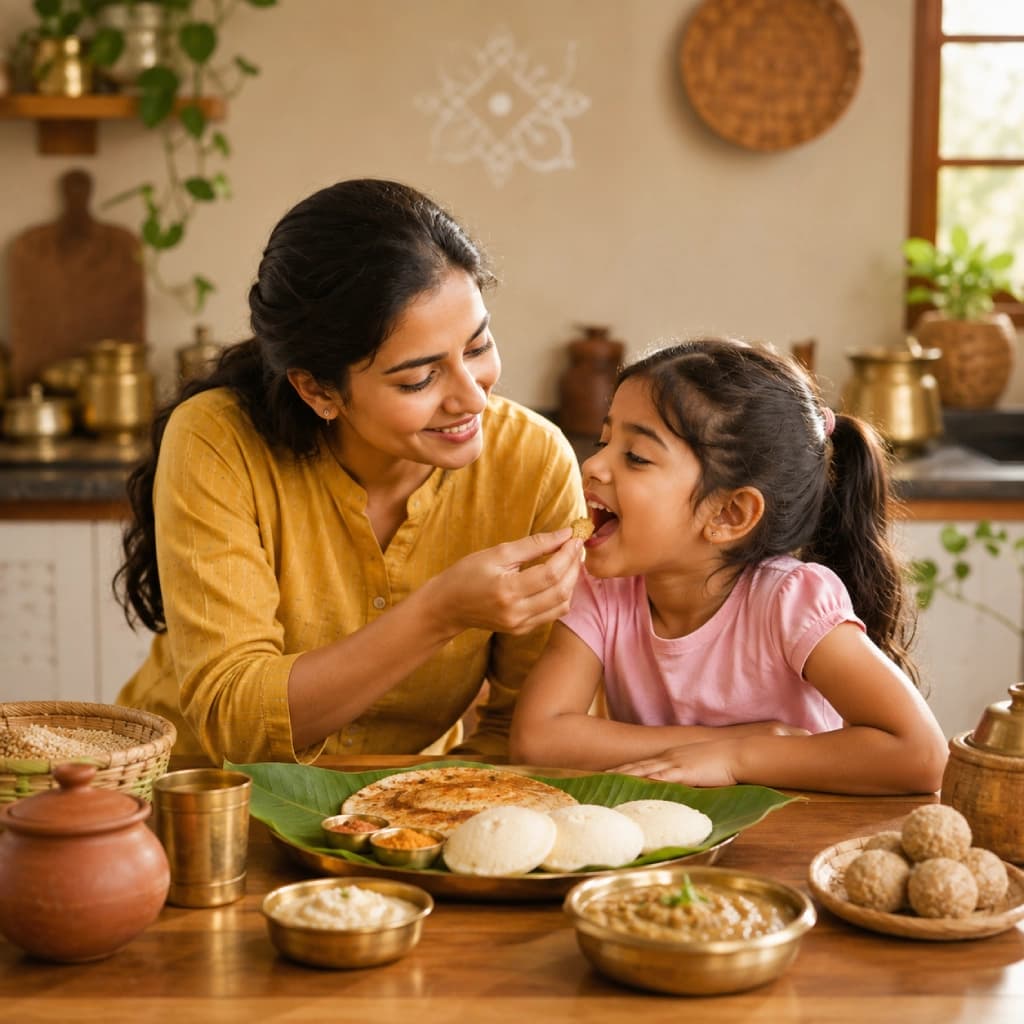
Prepare a traditional breakfast together on a weekend. Let children sit with grandparents while they talk about familiar ingredients. Share stories about foods you grew up eating.
These small experiences can make traditional food feel meaningful rather than old-fashioned.
Let Children Help in the Kitchen
You don't have to wait until children are old enough to cook.
Depending on their age, they can help with simple activities such as washing vegetables, choosing ingredients, mixing something or arranging food on the table.
When children participate in preparing food, they often become more curious about what they are eating.
Even something as simple as asking, "Which vegetable should we add today?" can make them feel involved.
Give Traditional Foods a Modern Touch
Traditional food doesn't have to look exactly the same as it did decades ago.
Our lifestyles have changed, and the way we prepare food can change too.
Traditional ingredients can be used in simple breakfasts, evening snacks, soups, dosa mixes, porridges and other convenient meals that fit today's schedules.
The important thing is not to copy the past perfectly. It is to carry forward the goodness while making it practical for today's families.
Convenience Matters for Today's Families
One of the biggest challenges parents face today is time.
Between school, work, travel, homework and household responsibilities, spending hours preparing every meal isn't always possible.
That's why traditional food options also need to fit into modern routines.
At Gramathu Soup, our aim is to bring traditional herbs, natural ingredients and familiar food goodness into today's busy lifestyle. Our products can be prepared in just 2 minutes, making it easier for families to include a traditional food option even on busy days.
Let Children See You Enjoying Traditional Foods
Children learn more from what they see than what they are told.
If parents regularly enjoy traditional foods at home, children naturally become more familiar with them.
You don't need to completely remove the foods they already enjoy. Instead, create a balanced family environment where traditional foods are also a normal and enjoyable choice.
Over time, familiarity can create curiosity.
Don't Compare Today's Children With Our Childhood
It can be tempting to say:
"When we were young, we ate everything. Why don't you?"
But every generation grows up differently.
Today's children have different schedules, different food choices and different surroundings. Instead of comparing them with our childhood, we can help them discover the foods we value in a way that suits their world.
Tradition grows when it is shared, not forced.
Pass Down the Story Along With the Food
Traditional food isn't only about ingredients. It is also about memories, culture and family.
Tell children where an ingredient comes from. Talk about the foods their grandparents enjoyed. Let them know why certain ingredients have been part of your family meals for years.
A simple bowl of soup or a traditional dosa can become more meaningful when there is a story behind it.
These stories can help children understand that traditional food isn't something from the past — it is a part of where they come from.
Conclusion
Introducing traditional foods to the next generation doesn't mean asking children to give up everything they enjoy today.
It is about giving them the opportunity to discover the flavours, ingredients and food habits that have been part of our culture for generations.
Start small. Make it enjoyable. Involve them. Keep it practical for modern life and, most importantly, let them experience traditional food without pressure.
Because when we bring traditional goodness into everyday family life, we aren't simply passing down food — we're passing down a connection to our roots.
