

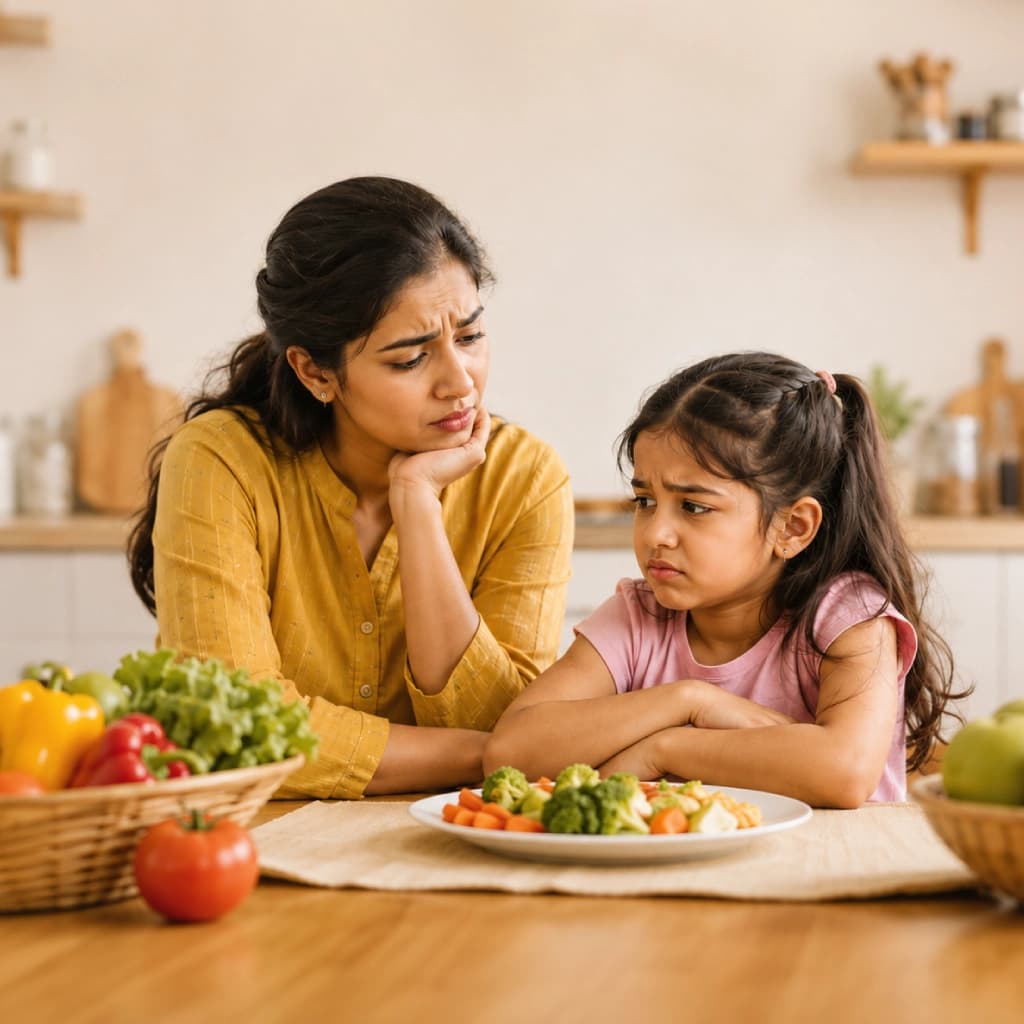
If you have ever prepared a healthy meal for your child only to hear, "I don't want this!", you are definitely not alone.
Many parents struggle when children prefer noodles, chips, biscuits, sweets or other familiar foods over vegetables, greens and homemade meals. It can be frustrating, especially when you are trying your best to build healthy eating habits for your family.
But getting children to eat better doesn't usually happen by forcing them. It often starts with making healthy food feel familiar, enjoyable and easy to accept.
Why Do Children Avoid Healthy Foods?
Children naturally have food preferences. They may dislike the colour, smell, texture or appearance of a particular food. Sometimes, they simply need to see and taste a food several times before becoming comfortable with it.
A child who refuses vegetables today may happily eat them a few weeks later.
So instead of thinking, "My child hates healthy food," it may be better to think, "My child hasn't found a way to enjoy this food yet."
That small change in perspective can make mealtimes much less stressful.
Don't Turn Mealtimes Into a Battle
One of the most common mistakes parents make is putting too much pressure on children to finish their food.
Statements like "You must eat this," or "If you don't eat vegetables, you won't get anything else" can make healthy food feel like a punishment.
Try keeping mealtimes relaxed. Offer healthy food along with foods your child already enjoys, and allow them to explore different tastes at their own pace.
The goal is not to make every meal perfect. It is to gradually build better eating habits.
Make Healthy Food More Familiar
Children are often more comfortable with foods they see regularly.
Instead of suddenly introducing a completely unfamiliar food, try adding small amounts to meals they already enjoy.
For example:
- Add finely chopped vegetables to dosa or other familiar foods.
- Include greens in dishes your child already likes.
- Offer fruits as an easy snack.
- Try different shapes, colours and textures.
- Serve small portions instead of filling the entire plate with something unfamiliar.
Small introductions can feel much easier for a child than a sudden change in their entire diet.
Let Children See You Eating Healthy Food
Children learn a lot by watching their parents.
If they regularly see you enjoying vegetables, fruits, traditional foods, soups and other wholesome options, healthy food becomes a normal part of family life.
You don't always have to tell them, "This is healthy, so you should eat it."
Sometimes, simply eating together and enjoying the same food can be more effective.
Give Them Small Choices
Children often like having a little control over what they eat.
Instead of asking, "Do you want healthy food?", give them simple choices.
For example:
"Would you like vegetable dosa or idli?"
"Would you like apple or banana?"
Both options can be nutritious, but your child still gets to make a choice.
This can make healthy eating feel less like something being forced on them.
Make Healthy Food Convenient for Busy Families
Modern family life is busy. Parents have work, school schedules, travel, homework and countless other responsibilities.
That doesn't mean healthy food has to disappear from the family routine.
The key is finding simple and practical options that fit into everyday life.
A warm bowl of soup, for example, can be an easy addition to an evening routine. At Gramathu Soup, our products are made with traditional herbs, spices and natural ingredients and can be prepared in just 2 minutes, making it easier for busy families to include a convenient traditional food option in their day.
Let Children Be Part of Food Preparation
Children may be more interested in eating something when they are involved in preparing it.
You can give them small, age-appropriate tasks such as:
- Washing vegetables
- Choosing fruits
- Mixing ingredients
- Arranging food on a plate
- Helping prepare a simple snack
- Choosing which vegetable to add to a meal
It doesn't have to be complicated. Even small involvement can make food more interesting to them.
Don't Expect Them to Love Everything
Healthy eating doesn't mean your child has to enjoy every vegetable, herb or traditional food.
Adults have food preferences too.
Instead of focusing on one food your child refuses, offer a variety of wholesome foods over time. Encourage them to try, but don't make every rejected food a big issue.
Their preferences can change as they grow.
Focus on Habits, Not One Meal
A child refusing vegetables at lunch doesn't mean they have unhealthy eating habits.
Look at the bigger picture.
Are they getting a variety of foods across the week? Are they drinking enough water? Are fruits, vegetables, grains, pulses and other wholesome foods regularly available at home?
Healthy eating is built through consistent everyday habits, not one perfect meal.
Healthy Food Can Still Be Enjoyable
One important thing parents sometimes forget is that healthy food doesn't have to be boring.
Traditional Indian food already offers so much variety — colourful vegetables, greens, grains, pulses, herbs, spices, dosas, porridges and soups.
The idea isn't to take away all the foods children enjoy. It's about gradually introducing more wholesome choices and helping them discover that good food can also be delicious.
Conclusion
Getting children to eat healthy food is rarely about finding one magic recipe or forcing them to finish their vegetables.
It is about patience, repetition, good examples and making healthy choices a normal part of family life.
Start small. Offer variety. Give children simple choices. Let them participate. And most importantly, don't turn every meal into a struggle.
Because healthy eating is not something children have to learn overnight. It is a habit they can slowly grow into — one meal, one choice and one family moment at a time.
